
You have a cold. Your nose is blocked. Your head feels heavy. And then your upper teeth start aching. Now you are confused.Is it just the cold? Is it a cavity? Do you need to see a dentist?
Here is the clear answer. Tooth pain due to cold is common. When you have a cold, your sinuses swell. Those sinuses sit very close to the roots of your upper back teeth. The pressure can feel exactly like a toothache. At the same time, if you already have teeth sensitive to cold, the discomfort can feel stronger during illness.
At National Dental Care, dentists help patients figure out whether it is sinus pressure or a real dental problem. Let’s break it down in simple terms so you know what is happening.
Can A Common Cold Really Cause Tooth Pain?
Yes. A common cold can cause tooth pain.
When your nose is blocked, your sinus spaces fill with pressure. Those sinuses sit just above your upper molars. When they swell, they press down on the nerves near the tooth roots. That pressure feels like a dull toothache.
This is why many people experience common cold & tooth pain together.
A small hint. If several upper teeth hurt at the same time, it is usually sinus pressure.
Why Does Sinus Pressure Feel Like A Tooth Problem?
Because the nerves are shared. When sinus pressure builds up:
- The area becomes inflamed.
- Fluid builds inside.
- Nerves get irritated.
- Pain signals travel to your upper teeth.
You may notice:
- Pain gets worse when you bend forward.
- Upper teeth feel heavy or sore.
- It feels like pressure, not sharp stabbing pain.
That is classic sinus related tooth pain due to cold.
Are My Teeth Sensitive To Cold Or Is It Sinus Pain?
This is the most common question. Here is an easy way to tell.
Sinus Pain Vs Tooth Sensitivity
| What You Feel | Most Likely Cause |
|---|---|
| Dull pressure in many upper teeth | Sinus pressure |
| Pain worse when bending forward | Sinus pressure |
| Sharp quick pain with cold drink | Tooth sensitivity |
| Pain stops in seconds | Tooth sensitivity |
| One tooth hurts while chewing | Dental problem |
If the pain is sharp and quick with cold water, that is usually teeth sensitive to cold.
If it feels heavy and spread out, that is usually sinus pressure.
What Are The Common Causes Of Cold Sensitivity In Teeth?
If cold drinks hurt even when you are not sick, there may be another reason.
Common causes of cold sensitivity include:
- Worn enamel.
- Gum recession.
- A small cavity.
- A cracked tooth.
- A loose filling.
When you have a cold, you also breathe through your mouth more. That dries your mouth. A dry mouth can make sensitive teeth feel worse.
So yes, common cold & tooth pain can sometimes be two things happening at once.
How Do I Know If It Is A Real Dental Problem?
Here is the simple rule. If your cold improves but your tooth pain does not, it is probably a dental issue.
Signs You Should Not Ignore
| Sign | What It Suggests |
|---|---|
| Pain in only one tooth | Tooth decay or crack |
| Pain when biting | Possible crack or infection |
| Pain lasts more than 1 minute | Deeper sensitivity |
| Gum swelling | Infection |
| Bad taste from one side | Decay or trapped food |
| Pain stays after cold is gone | Dental issue |
If you notice these, do not wait too long.
What Can I Do At Home To Reduce Tooth Pain During A Cold?
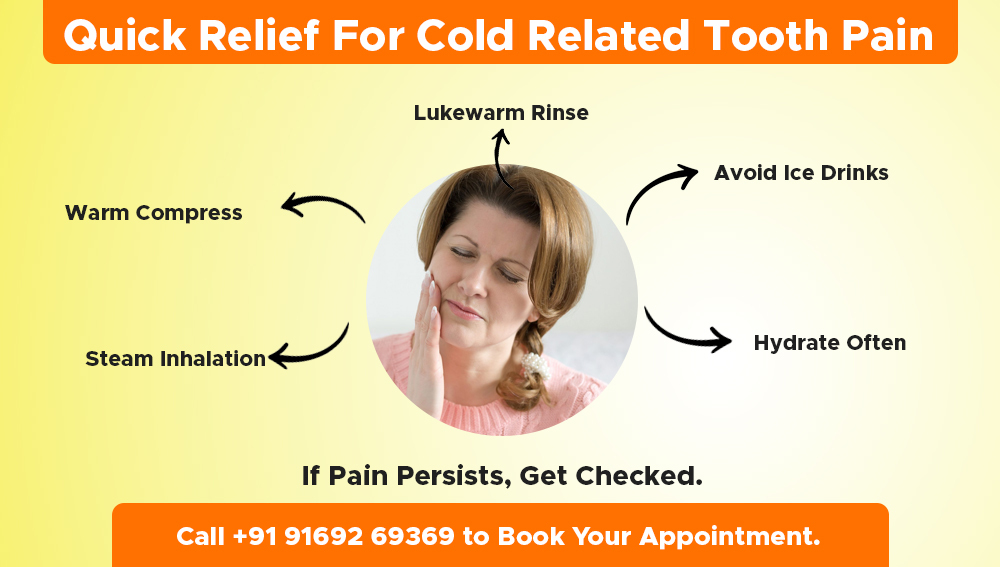
Simple home steps:
- Take steam to open blocked sinuses.
- Use a warm cloth on your cheek.
- Avoid very cold drinks.
- Brush with lukewarm water.
- Try a sensitivity toothpaste.
- Drink enough water.
If the pain reduces as your cold improves, it was likely sinus pressure.
When Should I Visit A Dentist For Tooth Pain Due To Cold?
You should visit a dentist if:
- Pain lasts more than 7 to 10 days.
- One tooth hurts more than others.
- Chewing increases the pain.
- Swelling appears.
- Pain wakes you at night.

Where Can I Find A Dentist In Bangalore Or Hyderabad?
If you are searching for a dentist near me, choose a clinic that looks at both sinus and dental causes.
If you are in Karnataka, a dentist in Bangalore can check whether it is sinus pressure or sensitivity. Many patients prefer the best dental clinic in Bangalore for proper diagnosis and follow up care.
If you are in Telangana, the best dental clinic in Hyderabad can confirm whether the issue is dental or cold related. At National Dental Care, dentists examine your symptoms, test the tooth gently, and only advise X-rays if needed. No guessing. No unnecessary treatment.
Book Your Consultation At National Dental Care
If your tooth pain due to cold is not settling, it is better to get clarity.
Whether you are looking for a dentist in Bangalore, the best dental clinic in Bangalore, or the best dental clinic in Hyderabad, National Dental Care provides structured evaluation and clear guidance.
Call +91 91692 69369
Visiting Hours: Mon to Sun, 9 AM to 9 PM
Frequently Asked Questions
Can a common cold cause tooth pain?
Yes. Sinus swelling can press on nerves near upper teeth and create pain.
Why do only my upper teeth hurt?
Upper teeth sit close to the sinus area. Pressure there feels like a toothache.
How long does tooth pain due to cold last?
It usually improves within a week as your cold settles. If it lasts longer, get checked.
What are common causes of cold sensitivity?
Worn enamel, gum recession, cavities, cracks, and loose fillings.
When should I see a dentist?
If pain lasts more than a week, increases while chewing, or stays in one tooth.
Recent Article
October 16, 2026
Gum Disease Treatment Cost in Hyderabad
October 2, 2026
Can I Switch From Braces To Invisalign Mid Treatment?
September 17, 2026
Gum Disease Treatment Cost in Bangalore
August 15, 2026
Halitosis: Causes, Treatments & Prevention
July 15, 2026
Teeth Braces — Cost, Types, Procedure & Benefits
May 18, 2026
Dental attention! Check if you need a tooth filling
April 6, 2026
Exposed Tooth Root Symptoms, Causes, and Treatments
 FAQs
FAQs Send us a Message!