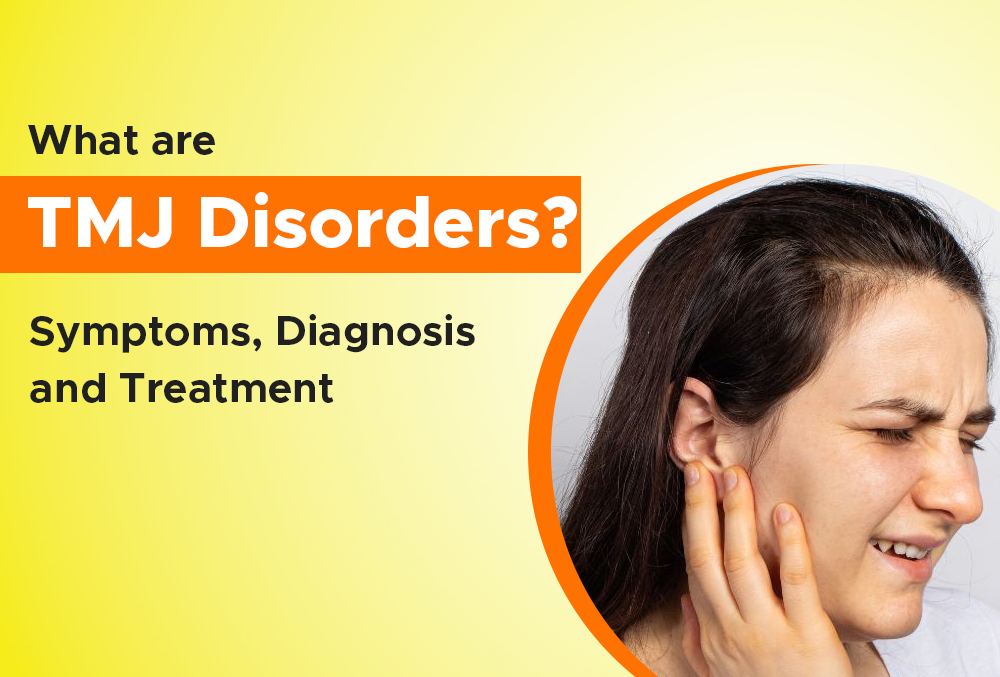
If your jaw clicks or pops when you open your mouth, or starts hurting every time you chew, it is easy to ignore at first. But once the discomfort starts showing up during meals, talking, or with repeated headaches, it feels like a big issue.
TMJ disorders affect the jaw joint and the muscles that help your mouth to open, close, and chew. When this system is under strain, it leads to pain, stiffness or clicking.
At National Dental Care, patients come in unsure whether the problem is from stress, clenching, a bite issue, or the joint itself. Our experts check how your jaw moves, where the pain starts, how the bite feels, and whether tests like a digital OPG are needed. This blog breaks down TMJ disorders symptoms, TMJ disorders diagnosis, and TMJ treatment, so you can understand what is happening and when is the time to visit the best dental hospital in Hyderabad.
What Are TMJ Disorders, And Why Do They Happen?
TMJ disorders affect the jaw joint and muscles near it. It happens when the joint, muscles, or bite is under strain and not working smoothly together.
The jaw joint helps you open, close, chew, and speak. When the joint, the surrounding muscles, or the way the teeth come together are under stress, symptoms show up. Common triggers include:
- Clenching or grinding
- Stress that makes the jaw stay tight
- A jaw injury
- Arthritis affecting the joint
- Bite strain or uneven loading
- Habits like gum chewing or nail biting
Top 6 TMJ Disorder Symptoms To Watch For
The most common TMJ disorders symptoms are jaw pain, chewing difficulty, clicking, headaches, or a feeling that the jaw is tight and not moving normally. Here are the top symptoms patients notice:
- Jaw Pain: Sharp pain near the joint or along the jaw muscles. It may feel dull, or tiring.
- Pain While Chewing: If one side of your jaw hurts when you chew or your jaw feels tired during meals, it can be a sign to get checked.
- Limited Mouth Opening: When opening wide feels difficult or stuck, the joint or jaw muscles might be under strain.
- Facial Pain: This pain can spread into the cheeks and side of the face.
- Temple Headaches: Some people feel pressure or headaches near the temples, after clenching or long chewing.
- Ear-Area Discomfort: TMJ disorder can feel like the pain is coming from the ear, even when the jaw is part of the problem.
These symptoms do not show up together, but even one or two repeated signs can be enough to justify a proper check up by a dentist in HSR layout.
How Do Dentists Diagnose TMJ Disorders?
TMJ disorders diagnosis starts with your symptoms, jaw movement, bite, and muscle tenderness, along with a test.
Many people think diagnosis means one scan and answer, but it starts with a conversation. Your dentist asks what you feel, when it happens, whether it is getting worse, and whether habits like clenching, gum chewing, or stress may be part of the picture. A typical TMJ disorders diagnosis may include:
- Symptom history
- Checking how wide the mouth opens
- Watching how the jaw moves
- Checking if the bite feels even
- Feeling for muscle tenderness
- Listening for clicking or grinding sounds
- Checking whether the jaw locks or shifts
Imaging is not always the first step. X-rays or additional imaging may be advised if symptoms are persistent, severe, or unclear, or if the dentist needs to rule out joint damage or another problem.
What Does TMJ Treatment Usually Involve?
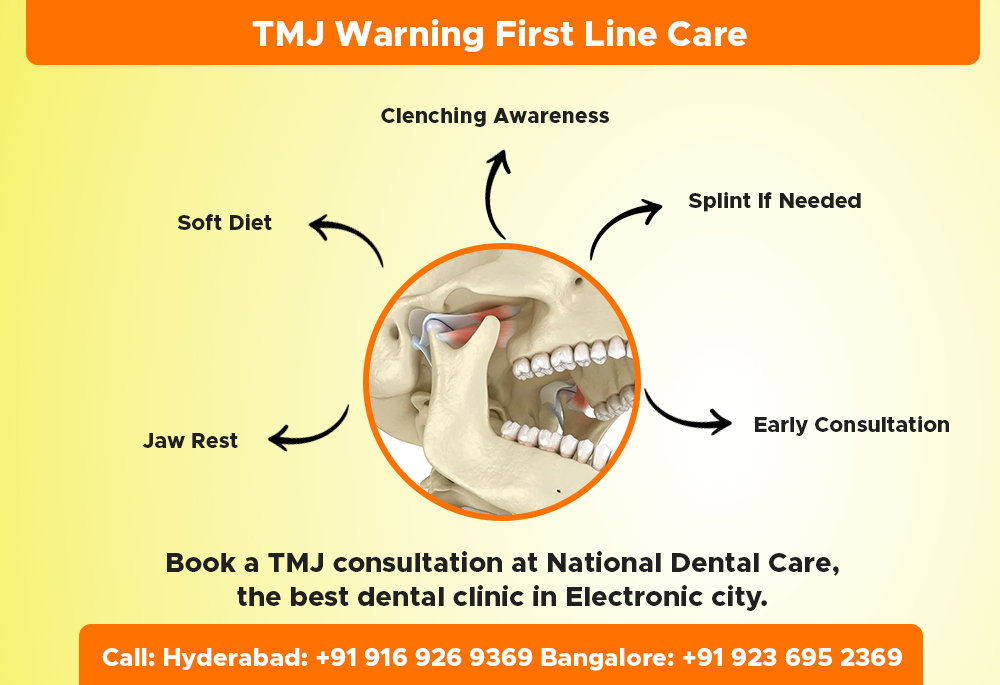
TMJ treatment begins with conservative care such as habit changes, bite support, jaw rest, and symptom control before more advanced steps are considered. A simple treatment plan may include:
- A soft diet for a short time
- Avoiding gum chewing and very chewy foods
- Paying attention to clenching habits
- Resting the jaw when it feels overused
- Heat or cold depending on what helps
- Jaw relaxation advice
- A splint or oral appliance when appropriate
The reason treatment varies is because a person with muscle overuse may need a different plan than someone with joint irritation or bite-related strain.
| What The Problem Looks Like | What The First Step May Be |
|---|---|
| Mild jaw soreness | Self-care and habit correction |
| Clenching-related pain | Bite support or splint if needed |
| Pain while chewing | Jaw rest and food changes |
| Repeated flare-ups | Full exam and targeted plan |
| Locking or severe pain | Early clinical evaluation |
When Does Jaw Clicking Need Immediate Treatment?
Every jaw clicking does not need immediate treatment, but pain, locking, repeated headaches, or difficulty chewing should be checked. A painless click can sometimes be monitored. But a jaw that locks, feels stuck, or keeps interfering with eating should not be ignored. Better-quality sources consistently make that distinction.
When To See A Dentist For TMJ Pain In Hyderabad Or Bangalore?
You should visit a dentist in HSR layout if jaw symptoms keep returning, interfere with eating , talking, or are linked to headaches and facial pain. You should book soon with the best dental hospital in Hyderabad if:
- Jaw pain is repeated or worsening
- Chewing feels uncomfortable
- Jaw opening is restricted
- Headaches seem linked to the jaw
- Clicking turns painful
- The jaw feels stuck or uneven
Book A TMJ Consultation At National Dental Care
A proper consultation can help you understand whether your symptoms are from the jaw joint, muscles tightness, bite strain, or another issue and get a customized TMJ treatment path.
At National Dental Care, the approach is not one-size-fits-all. The team looks at how your jaw moves, what triggers the pain, how your bite feels, and whether daily habits like clenching are making things worse. So if you are searching for the best dental clinic in Electronic city, this is the right time to get your jaw pain checked properly.
Call to book an appointment at National Dental Care : Hyderabad: +91 916 926 9369, Bangalore: +91 923 695 2369
FAQs
Are TMJ Disorders The Same As Jaw Clicking?
Jaw clicking is one of TMJ disorders symptoms, but these disorders are broader. It may include pain, stiffness, headaches, chewing discomfort, or limited movement.
Can TMJ Disorders Cause Headaches?
Temple headaches and facial tension are common in some TMD cases. They occur when jaw muscles are overworked or clenching is involved.
How Long Does TMJ Treatment Take?
The TMJ treatment timeline depends on the cause of the disorder along with how early the problem is addressed. Some cases improve with conservative care, while repeated or complex cases need longer follow-up.
Will I Always Need A Mouth Guard For TMJ?
A mouth guard helps some patients from a splint or appliance, but not everyone needs them. TMJ treatment depends on finding out whether clenching, bite strain, or another factor is driving the symptoms or not.
Recent Article
October 16, 2026
Gum Disease Treatment Cost in Hyderabad
October 2, 2026
Can I Switch From Braces To Invisalign Mid Treatment?
September 17, 2026
Gum Disease Treatment Cost in Bangalore
August 15, 2026
Halitosis: Causes, Treatments & Prevention
July 15, 2026
Teeth Braces — Cost, Types, Procedure & Benefits
May 18, 2026
Dental attention! Check if you need a tooth filling
April 6, 2026
Exposed Tooth Root Symptoms, Causes, and Treatments
 FAQs
FAQs Send us a Message!