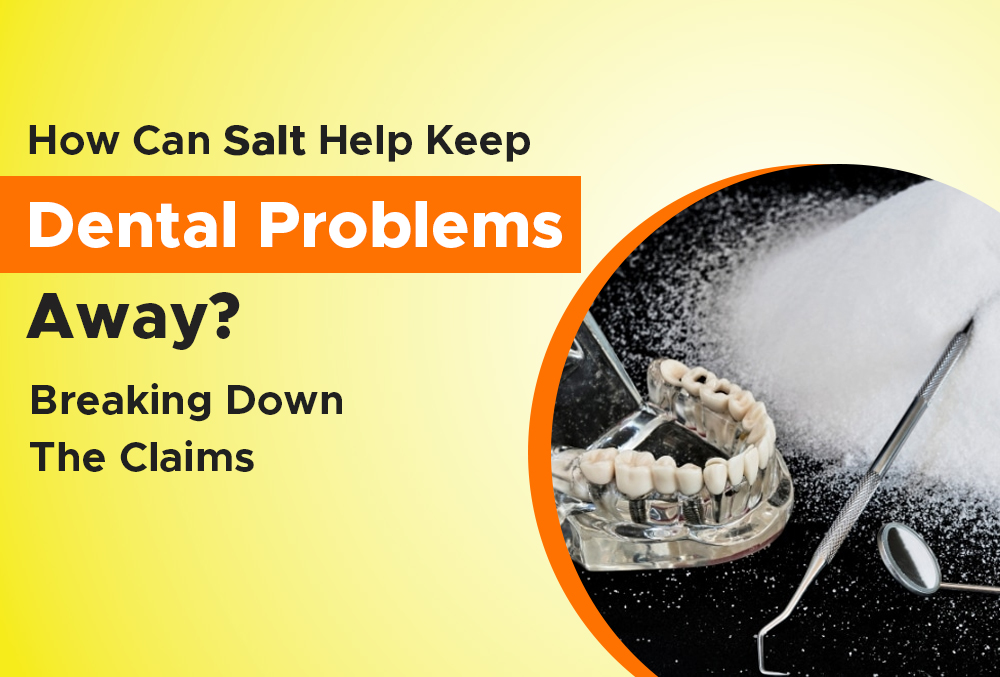
A lot of people grow up hearing the same advice that is if your gums hurt, rinse with salt water. If your mouth feels sore, use salt. These tips are everywhere, and to be fair, patients start thinking that salt can handle their oral health.
Salt keeps dental problems away only in a limited sense. Warm salt water may help with short term soreness and may make the mouth feel cleaner for a while, but it does not replace fluoride toothpaste, or treatment at a dental clinic in Whitefield. Thus the fluoride toothpaste remains central to cavity prevention.
At National Dental Care, we see a lot of patients who have tried home remedies first and come in later when the actual cause still persists. This guide on salt and dental health, will help you sort out what salt can do, what brushing teeth with salt benefits are, and when it is time to stop experimenting and get the right care from a dental clinic in Hyderabad.
Does Salt Really Keep Dental Problems Away?
Salt can support short term mouth care, but it cannot prevent or treat every dental problem. Salt may help reduce temporary irritation in the mouth, especially as a warm salt water rinse. But it cannot stop decay, remove tartar, or cure gum disease. Those are bigger problems with bigger causes. Good oral hygiene still depends on brushing, flossing, and routine care.
So yes, salt keeps dental problems away is partly true. It is more accurate to say salt may help comfort in selected situations, and not act as a full dental solution.
What Are The Real Salt Benefits For Oral Health?
The real salt benefits for oral health are linked to warm salt-water rinses, and not brushing directly with salt. A warm salt water rinse can soothe mild mouth soreness. It may also help the mouth to feel fresher for a short time. It can also be useful after irritation or minor gum discomfort.
But that is the limit thus, salt and dental health should be discussed. Salt may provide comfort but it does not rebuild enamel. It does not remove tartar. It also does not replace fluoride, which is one of the biggest reasons standard toothpaste works for cavity prevention.
Is Salt And Dental Health A Good Combination For Daily Care?
Salt and dental health can work together in limited ways. But remember, salt rinse and salt brushing are not the same thing. Salt is abrasive, and when people scrub with it, they may irritate the gums. Colgate’s oral-health guidance also points out that fluoride matters most for cavity prevention and that brushing with plain salt is not a substitute for fluoride toothpaste.
So if you are thinking about brushing teeth with salt benefits, you must know that salt alone lacks fluoride and can be too harsh when used directly. For daily care, use:
- Fluoride toothpaste
- Gentle brushing
- Floss or interdental cleaning
- Regular professional check-ups
When Can Salt Water Actually Help, And When Can It Make Things Worse?
Salt water can help in a few mild oral situations, but overuse or wrong use can irritate sensitive tissues. There are moments when a salt-water rinse can be useful.
- Mild gum soreness
- Small mouth irritation
- Temporary discomfort in the mouth
In some cases, dentists also advise salt-water rinses after certain procedures, but only in the way and timing they recommend. It should not be self-prescribed for every problem.
It can make things worse when:
- You use it too often
- Brush directly with coarse salt
- Already have sensitive teeth
- You rely on it instead of treating plaque, or infection

What Works Better Than Salt For Daily Dental Protection?
For daily dental protection, brushing with fluoride toothpaste, cleaning between teeth, and regular check-ups work better than salt alone. If your goal is strong teeth, healthier gums, fresher breath, and fewer dental problems, salt is not your main tool. Your daily basics matter much more. The most useful routine is:
- Brush twice daily with fluoride toothpaste
- Clean between the teeth once a day
- Reduce plaque build-up before it hardens
- Get regular dental cleanings when needed
When Should You Visit A Dental Clinic Instead Of Relying On Salt?
You should visit a dental clinic in Whitefield if pain, swelling, bleeding, bad breath, or tartar keeps coming back. Home care has limits. Salt water is not the answer when:
- Gums bleed often
- Beath stays bad
- Tartar is visible
- Pain returns again and again
- Swelling does not settle
- Teeth feel sensitive or loose
Book An Appointment At National Dental Care If Symptoms Keep Returning
If home remedies are not fixing the problem, a visit to a dental clinic in Hyderabad can help you find the real cause and the right treatment.
At National Dental Care, the focus is not on overpromising miracle fixes, but is on checking what is actually going on and guiding you with the right next step.
So if you have been depending on salt but the soreness, bad breath, or gum issue keeps returning, do not keep waiting.
Call To Book
- Hyderabad: +91 916 926 9369
- Bangalore: +91 923 695 2369
A proper visit to a dental clinic in Hyderabad can save you a lot of trial and error.
FAQs
Is Brushing With Salt Good Every Day?
No. Daily brushing should be done with fluoride toothpaste, not plain salt. Salt can be abrasive and does not offer the cavity protection that fluoride does.
Can Salt Remove Plaque Or Tartar?
Not properly. Salt does not remove hardened tartar, and even plaque control is much better with normal brushing and interdental cleaning. Tartar usually needs professional scaling.
Does Salt Help Gum Swelling?
It may help mild gum irritation for a short time when used as a warm salt-water rinse. But if swelling keeps coming back, the actual cause still needs treatment.
Is Salt Water Better Than Mouthwash?
Not necessarily. Salt water can be useful in some short-term situations, but it is not a replacement for all mouthwash uses or for routine brushing and flossing. The right option depends on why you are using it.
Should I Visit A Dentist If Salt Water Is Not Helping?
Yes. If symptoms keep returning, get checked. That usually means there is an underlying cause like plaque, tartar, decay, or gum disease that home care alone will not fix.
Recent Article
October 16, 2026
Gum Disease Treatment Cost in Hyderabad
October 2, 2026
Can I Switch From Braces To Invisalign Mid Treatment?
September 17, 2026
Gum Disease Treatment Cost in Bangalore

August 15, 2026
Halitosis: Causes, Treatments & Prevention
July 15, 2026
Teeth Braces — Cost, Types, Procedure & Benefits
May 18, 2026
Dental attention! Check if you need a tooth filling
April 6, 2026
Exposed Tooth Root Symptoms, Causes, and Treatments
 FAQs
FAQs Send us a Message!