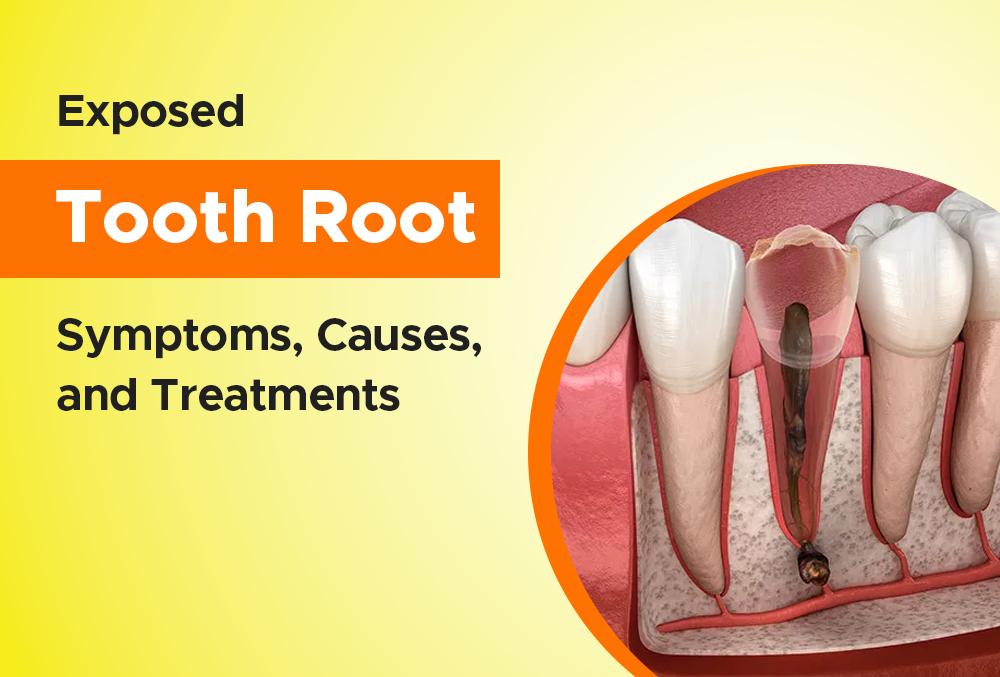
Exposed teeth happen when the gum tissue pulls back or the root surface becomes uncovered, which leaves that area more sensitive and vulnerable. The important thing to know is this: an exposed root does not always mean you need root canal treatment, but exposed tooth root symptoms should not be ignored either. Gum recession, abrasion, grinding, and gum disease are all common triggers.
At National Dental Care, the team handles gum care, sensitivity treatment, cervical abrasion care, preventive dentistry, and root canal support when the nerve is actually involved.
This guide by our expert team discusses exposed tooth root causes, which symptoms matter, what dentists check, and when root canal treatment in Hyderabad may be the right next step.
What Does It Mean When A Tooth Root Is Exposed?
An exposed tooth root means the gum or protective covering over the root surface has worn away, leaving the root more sensitive than normal. The visible part of your tooth is the crown, and the part normally hidden under the gum is the root. The crown has strong enamel but the root does not have that same enamel protection. That is why root exposure is more sensitive.
This also explains why the tooth may look longer. The tooth did not grow. The gum moved back, so more of the root surface became visible. When patients search for exposed tooth root symptoms, what they notice first is not the root itself but a sudden change in how that tooth feels.

What Are The Most Common Exposed Tooth Root Symptoms?
The most common exposed tooth root symptoms are sharp sensitivity, pain while brushing, and a tooth that suddenly feels more vulnerable near the gumline. You may notice:
-
- Pain with cold drinks
- Discomfort with hot, sweet, or sour foods
- A sharp sting while brushing
- Gum tenderness or slight bleeding
- A rough or notched area near the gumline
| Symptom | What It May Mean |
|---|---|
| Sharp cold sensitivity | Root surface may be exposed |
| Pain while brushing | Gumline area is irritated or uncovered |
| Tooth looks longer | Gum recession may be present |
| Tender or bleeding gums | Gum inflammation may be involved |
| Rough notch near the gumline | Abrasion or root wear may be contributing |
What Are The Main Exposed Tooth Root Causes?
The main exposed tooth root causes are gum recession, gum disease, aggressive brushing, clenching, and wear near the gumline. When the gum tissue slowly moves down, it exposes part of the root. That can happen from:
-
-
- Gum disease
- Plaque and tartar build-up
- Brushing too hard
- Smoking or tobacco use
- Clenching and grinding
- Cervical abrasion near the gumline
- Long-term bite stress
-
How Do Dentists Diagnose The Cause Of An Exposed Tooth Root?
Dentists diagnose exposed root problems by checking the gums, root surface, bite pressure, sensitivity pattern, and signs of infection or recession. The first step is a close look and the right questions. A proper exam may include:
-
-
- Checking how far the gums have receded
- Looking at the exposed root area
- Checking for plaque, tartar, or gum inflammation
- Asking what triggers the pain
- Testing sensitivity
- Checking whether you grind or clench
- Looking for a notch or wear near the gumline
- Taking imaging if deeper infection or nerve involvement is suspected
-
Self-diagnosis is unreliable because root sensitivity, gum recession, cervical abrasion, and root decay can feel similar in the beginning. That is why the treatment path changes depending on what the dentist actually finds.
Does An Exposed Tooth Root Always Need Root Canal Treatment?
No. Most exposed roots do not need root canal treatment unless the nerve inside the tooth is inflamed, infected, or causing deeper pain. Root canal becomes relevant when the pulp inside the tooth is affected, such as with deep decay, infection, or more severe pain patterns. So if you are searching for a root canal in Bangalore that may be the right treatment only if the pain has moved beyond surface sensitivity and the nerve is involved.
What Are The Best Exposed Tooth Root Treatments?
The best exposed tooth root treatments depend on the cause, and they may range from desensitizing care to gum treatment, bonding, or root canal in more severe cases. Treatment may include:
-
-
- Desensitizing toothpaste and in-clinic agents
- Fluoride treatment
- Bonding for root coverage
- Scaling and gum therapy
- Gum grafting
- Root canal treatment
-
| What The Problem Looks Like | Most Likely Treatment Direction |
|---|---|
| Mild cold sensitivity near the gumline | Desensitizing care and fluoride support |
| Gum recession with visible root | Gum care and recession management |
| Root exposure with tartar and bleeding gums | Scaling and gum therapy |
| Notched root area from brushing or wear | Bonding or abrasion-focused care |
| Deep lingering pain or infection signs | Root canal evaluation |
When patients look for a root canal treatment cost in Hyderabad they usually want one answer. But the right answer depends on whether the problem is surface sensitivity, gum loss, abrasion, or deeper nerve involvement.
What Can You Do Daily To Prevent Root Exposure From Getting Worse?
Prevention starts with gentle brushing, plaque control, and treating gum problems early before the root surface becomes more exposed. What helps daily:
-
-
- Use a soft brush
- Brush gently near the gumline
- Do not scrub back and forth with force
- Avoid tobacco if possible
- Do not delay professional scaling
- Get gum issues checked early
-
Once root surfaces are exposed, you may manage symptoms, but you still want to stop the recession or wear from continuing. NDC’s preventive dentistry and gum care content strongly supports early detection and routine care before small problems become bigger ones.
Book A Consultation At National Dental Care For Exposed Tooth Root Treatment
A proper consultation can show whether your root exposure needs gum treatment, sensitivity care, or root canal support before the problem gets worse.
At National Dental Care, that evaluation does not begin with assumptions. It begins with checking the gums, the root surface, the bite, the sensitivity pattern, and whether the nerve inside the tooth is actually involved. That is important because exposed roots are not all treated the same way.
A smaller group may need root canal treatment in Hyderabad or root canal in Bangalore when the pain points to deeper nerve involvement. NDC can support all of those paths through preventive dentistry, sensitivity management and gum treatment. If you are comparing the Painless root canal treatment in Bangalore or the best root canal treatment in Hyderabad, call: Hyderabad: +91 916 926 9369, Bangalore: +91 923 695 2369
FAQs
Are Exposed Tooth Root Symptoms Always Serious?
Exposed tooth root symptoms are not always serious, but they should not be ignored. Many cases begin as sensitivity from gum recession but if the pain worsens you must get a dental check.
What Are Exposed Tooth Root Symptoms Most People Notice?
The first exposed tooth root symptoms are sharp cold sensitivity, brushing discomfort, and a tooth that seems longer near the gumline. Some people also notice bleeding.
Can Exposed Tooth Root Causes Be Reversed At Home?
Most exposed tooth root causes cannot be fully reversed at home once surface loss has happened. Home care does help stop it from getting worse, but treatment depends mostly on the cause and the amount of damage caused.
What Are The Most Common Exposed Tooth Root Treatments?
The most common exposed tooth root treatments include desensitizing products, fluoride care, gum treatment, bonding, and sometimes gum grafting. And root canal treatment is mostly reserved for deeper nerve-related problems.
Recent Article
April 20, 2026
Halitosis: Causes, Treatments & Prevention
April 17, 2026
Gum Disease Treatment Cost in Bangalore
April 16, 2026
Gum Disease Treatment Cost in Hyderabad
April 15, 2026
Teeth Braces — Cost, Types, Procedure & Benefits
April 6, 2026
Exposed Tooth Root Symptoms, Causes, and Treatments
April 1, 2026
Can I Switch From Braces To Invisalign Mid Treatment?
March 31, 2026
What Is a Hybrid Denture? Benefits & How It Works
 FAQs
FAQs Send us a Message!