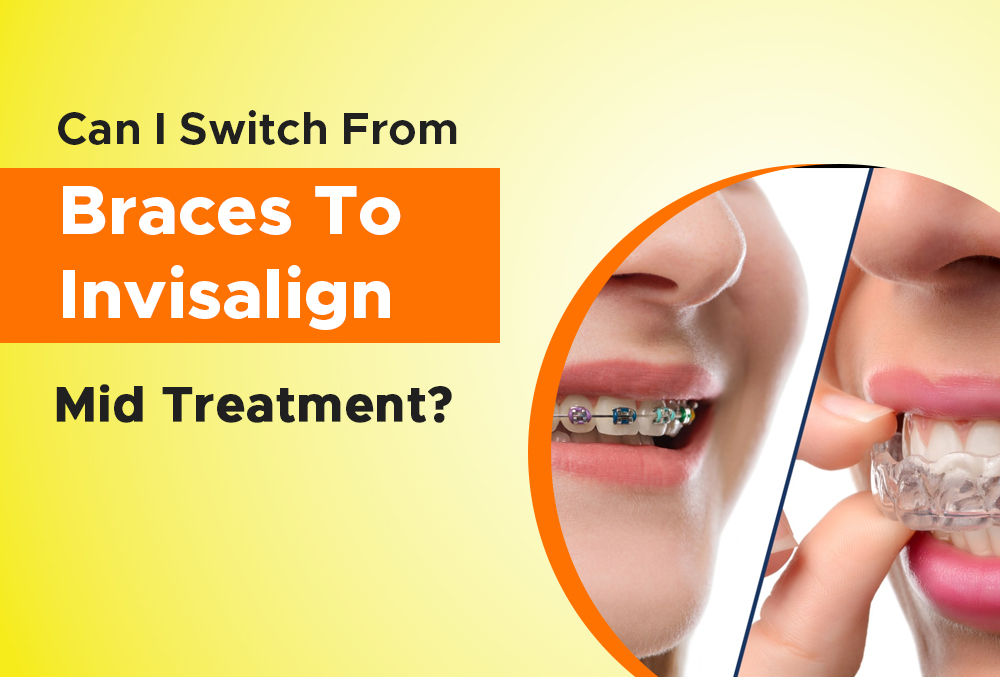
If you have already started braces and now feel tired of the wires, food restrictions, and constant cleaning struggle, you are not alone. A lot of patients reach a point where they ask “Can I just move to Invisalign now?”
The answer is yes, switching to invisalign from braces is possible, but it depends on how much tooth movement is still left, how complex the bite is, and whether aligners can finish the rest of the job properly.
At National Dental Care, invisalign planning starts with scans, bite evaluation, and a customized treatment plan in Hyderabad and Bangalore. With clear aligner treatment around digital assessment, customized planning, and case suitability rather than a one-size-fits-all promise, National Dental Care offers best invisalign treatment in Bangalore.
This guide by our expert team explains switch from braces to invisalign, who is a good fit, how the process works, and when staying with braces may actually be the smarter option.
Why Do Patients Want To Switch From Braces To Invisalign?
Most patients think about switching because they want something more discreet, easier to clean, and more comfortable in daily life. This starts halfway through treatment. The braces may be working, but the experience is not what the patient expected. Common reasons patients want to switch from braces to invisalign include:
- A less visible treatment option
- Tired of food restrictions
- Brushing and flossing feel difficult around brackets
- Wires or brackets keep irritating the cheeks
- Patients want more confidence in social or professional settings
5 Signs You May Be Ready for Switching To Invisalign From Braces
- Your remaining correction is moderate, not highly complex
- You want a more discreet look for work or daily life
- You are disciplined enough to wear aligners properly
- Braces are causing repeated comfort issues
- Your orthodontist feels aligners can finish the case well

Can You Really Switch From Braces To Invisalign Mid Treatment?
Yes, many patients can switch invisible braces in Hyderabad mid-treatment, but the decision depends on the remaining tooth movements, bite needs, and how suitable aligners are for the rest of the case.
If the teeth still need movements that aligners can handle well, and if the patient is likely to wear the aligners properly, the switch may work smoothly. But if the bite is complex or the remaining correction needs stronger fixed-force control, braces may be the better option to stay.
Thus, the decision depends on how far treatment has progressed, how complex the case is, and whether aligners can predictably handle the rest. That is why orthodontist evaluation matters.
Who Is A Good Candidate For Switching To Invisalign From Braces?
Patients are more likely to be good candidates when the remaining movements are moderate, and they can wear the trays as instructed. A good candidate has:
- No major jaw mismatch still needing fixed control
- Enough discipline to wear aligners 20 to 22 hours a day
- Realistic expectations about treatment time and refinements
- A case that is already partway corrected
Braces work all the time because they are fixed. Invisalign works only when you wear it properly.
What Is The Process Of Switching From Braces To Invisalign Mid Treatment?
The process starts with removing braces, taking fresh scans or impressions, and creating a new aligner plan based on your current tooth position. The process goes like:
1. Braces Are Removed
Brackets and wires are taken off carefully, and the teeth are cleaned. Orthodontic guidance on switching describes this as a straightforward removal-and-clean-up stage before new planning begins.
2. Fresh Scans Or Impressions Are Taken
Your teeth are no longer where they were when braces first started, thus the new aligner plan must reflect your current tooth position.
3. Bite Evaluation And Digital Planning
Your bite is checked again, and a fresh aligner plan is designed around the correction still left to do.
4. Aligners Are Made
You may need a short waiting period while the new set is prepared.
5. Wear Begins
Most patients are advised to wear aligners 20 to 22 hours a day. If that discipline is not realistic, the result may suffer.
6. Refinements May Be Needed
Some cases need extra aligners toward the end to fine-tune the result.
Will Switching From Braces To Invisalign Change My Treatment Time Or Cost?
The change in treatment time and cost of switching from braces to invisalign can happen. Some patients finish in a similar timeline, while others may need a revised plan, more aligners, or a different cost depending on what correction is left.
If the remaining correction is simple, the treatment may move ahead smoothly. If the bite still needs more work, the new plan may add time. The same goes for cost.
What Are The Benefits Of Invisalign After Braces?
For the right case, invisalign can make treatment feel cleaner, less visible, and easier to manage in daily life. Patients notice these advantages:
- Trays are removable
- Brushing is easier
- Food restrictions are fewer
- The look is more discreet
- Day-to-day comfort feels better
This is why so many adults ask about invisalign in Bangalore once they have experienced life with fixed braces. For the right patient, the treatment can make it easier to live with.
| Braces Mid-Treatment Experience | What Invisalign May Improve |
|---|---|
| Visible brackets and wires | More discreet appearance |
| Food restrictions | Easier eating once trays are removed |
| Harder brushing | Better oral hygiene access |
| Wire irritation | Smoother day-to-day comfort |
| Fixed all-day system | Removable but discipline-dependent |
Book An Invisalign Consultation At National Dental Care
A proper consultation helps you understand whether switching is realistic for your case, how the new plan would work, and what results to expect.
At National Dental Care, this process starts with scans, bite assessment, and a customized aligner plan. That is important because the best invisalign treatment in Hyderabad is not the same for every patient. NDC’s aligner and invisalign care is based around digital precision, customized planning, and expert evaluation, which fits this kind of mid-treatment switch well.
So if you are looking for an invisalign clinic in Bangalore or an invisalign clinic in Hyderabad, and you are wondering whether your current braces case can be completed with aligners, this is the right time to call and book an appointment.
- Hyderabad: +91 916 926 9369
- Bangalore: +91 923 695 2369
FAQs
Will I Lose The Progress Already Made With Braces?
Not always. In many cases, the progress made with braces is not lost. A new aligner plan is simply built around your current tooth position after fresh scans.
Is Switching To Invisalign From Braces Painful?
The switch itself is usually manageable. You may feel some pressure when the aligners begin working, but that is also common with normal aligner treatment.
Do I Need To Wear Invisalign All Day After Switching?
Yes, in most cases you need to wear aligners for about 20 to 22 hours daily for them to work properly. That is one of the biggest differences from braces.
Can Invisalign Fix The Same Bite Issues Braces Were Treating?
Sometimes yes, sometimes not fully. Invisalign can treat many mild to complex issues, but some severe or unique bite problems may still be better managed with braces.
How Do I Choose The Best Invisalign Treatment In Bangalore Or Hyderabad?
Choose a clinic that starts with scans, bite assessment, and customized planning instead of giving a quick yes or no. That is especially important when you are already mid-treatment and considering a switch.
Recent Article

April 20, 2026
Halitosis: Causes, Treatments & Prevention

April 17, 2026
Gum Disease Treatment Cost in Bangalore

April 16, 2026
Gum Disease Treatment Cost in Hyderabad
April 15, 2026
Teeth Braces — Cost, Types, Procedure & Benefits
April 6, 2026
Exposed Tooth Root Symptoms, Causes, and Treatments
April 1, 2026
Can I Switch From Braces To Invisalign Mid Treatment?

March 31, 2026
What Is a Hybrid Denture? Benefits & How It Works
 FAQs
FAQs Send us a Message!