
If cold water suddenly hurts near the gumline, a tiny depression shows up on the side of the tooth or brushing feels stingy in one spot. Most people assume it is a cavity and start panicking, or switch toothpaste and hope it will settle.
But it can be tooth cervical abrasion caused by repeated friction, most commonly hard brushing or abrasive toothpaste. It can get worse if gum recession, acidic habits, or clenching are also involved.
At National Dental Care, we see this pattern often and the fix is simpler than what people think. This guide by our experts covers the real tooth cervical abrasion causes, the best treatment options, and prevention steps that actually work.
What is Tooth Cervical Abrasion and Why Does it Happen?
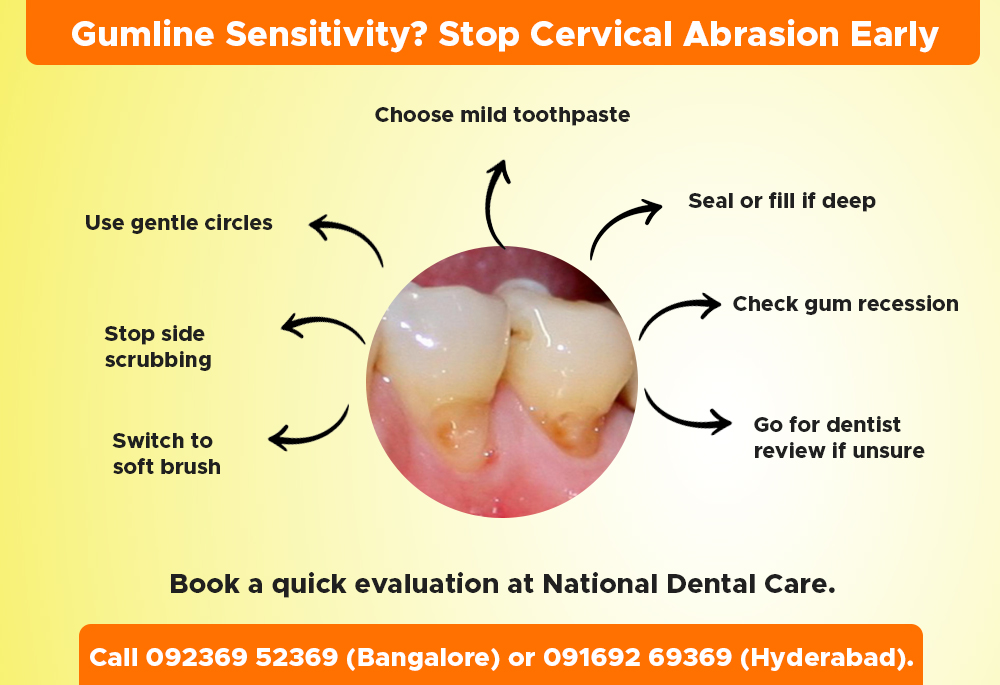
Tooth cervical abrasion is the loss of tooth structure right where the tooth meets the gumline, generally on the cheek side. This area gets hit first because:
- Enamel is thinner near the gumline
- When gums shrink, the root surface can get exposed, and it wears
- Brushing pressure mostly concentrates at the gum margin
It may look like a shallow, smooth groove but can deepen and sensitivity can increase, especially with food like cold drinks, sweets, or even air hitting the tooth.
What are the Tooth Cervical Abrasion Causes?
In many people, brushing, recession, stress or acids team up leading to cervical abrasion. Thus the most common tooth cervical abrasion causes are:
- Brushing technique and pressure
- Side to side scrubbing
- Brushing too long in one spot
- Brush and toothpaste choice say hard bristles
- Gum recession and exposed root
How Do You Know if it is Cervical Abrasion, a Cavity, Erosion or Abfraction?
Cervical abrasion is usually smooth while cavities often feel sticky or rough, and erosion looks rounded and shiny because of acids.Many blogs online confuse these together, so here is a quick comparison:
| Condition | Typical Cause | Look And Feel |
|---|---|---|
| Cervical Abrasion | Brushing friction, abrasives | Smooth notch or groove near gumline |
| Cervical Cavity | Tooth decay bacteria | Rough, sticky, may look dark |
| Erosion | Dietary or gastric acids | Rounded, shiny wear surface |
| Abfraction | Bite stress and flexing | Sharp wedge, often deeper |
If you are still unsure, do not self diagnose. A quick dental exam at the best dentist in Hyderabad can confirm what it is and stop you from treating the wrong condition.
Best Tooth Cervical Abrasion Treatment Approach
Tooth cervical abrasion treatment depends on how deep the groove is and how strong your sensitivity feels. Mild cases improve with sealing, while deeper notches need bonding or fillings to protect the tooth.
Treatment Options Based On What You See
| What You See | Best Next Treatment |
|---|---|
| Shallow groove, mild sensitivity | Desensitizing toothpaste + gentle brushing. |
| Mild case not settling | Fluoride or desensitizing application in clinic. |
| Moderate sensitivity keeps returning | Professional varnish or desensitizing agents. |
| Triggers feel sharp and frequent | Seal exposed dentin to block triggers. |
| Deep groove or food gets stuck | Bonding or tooth-coloured filling for protection. |
| Gum recession present | Gum care plan + cleaning support. |
| Recession plus ongoing sensitivity | Gum-focused treatment if root exposure is high. |
How Do You Prevent Tooth Cervical Abrasion From Getting Worse?
Tooth cervical abrasion prevention is mainly about gentle brushing and reducing repeated friction and acid exposure near the gumline. Here is a simple plan you can start tonight:
- Hold the brush at a gentle 45 degree angle toward the gumline.
- Use small circular motions, not harsh side to side scrubbing.
- Brush for two minutes with no extra force.
- Use a soft bristle brush
- Avoid overly abrasive toothpaste unless your dentist recommends
- Do not brush immediately after acidic food
Preventing cervical abrasion is effective when you stay consistent for a few weeks. Most people notice their sensitivity reduce once they stop scrubbing.
When Should You See a Dentist?
You should see a dentist if sensitivity is increasing, the notch is deepening, or you are unsure whether it is an abrasion or a cavity.
What Do Dentists Usually Do First in a Clinic?
- Visual exam to confirm it is abrasion
- Check gum recession and plaque trapping
- Assess sensitivity level
- Look for contributing habits
This is important because abrasion can overlap with erosion or abfraction, and treatment changes when overlap happens.
Book an Appointment Today at National Dental Care
When sensitivity is bothering you daily, do not wait for the groove to deepen search for the best dental clinic near me . A quick check can save your tooth from further wear.
At National Dental Care, our dentists assess the groove depth, sensitivity level, gum recession, and brushing habits in one visit. With 20 years of experience and 13 branches providing high quality care, you get a clear plan based on what your teeth actually need.
If you want a dentist in Bangalore or the best dentist in Hyderabad for gumline sensitivity, book an appointment today.
Call To Book Now:
- Bangalore: 092369 52369
- Hyderabad: 091692 69369
- Timings: 9 AM to 9 PM, all days
FAQs
Can Tooth Cervical Abrasion Heal On Its Own?
Tooth cervical abrasion does not grow back because it is tooth wear,and not a cut on skin.
When Do You Need a Filling for Tooth Cervical Abrasion?
You may need a filling when your groove is deep, food keeps getting stuck, sensitivity keeps returning, or the area traps plaque. Bonding or filling protects the tooth and reduces triggers.
What Toothbrush and Toothpaste are Best for Tooth Cervical Abrasion Prevention?
A soft-bristle brush with gentle circular brushing works best for prevention. Also use a non-gritty toothpaste unless your dentist suggests otherwise, because harsh abrasives can worsen the tooth wear.
Recent Article
October 16, 2026
Gum Disease Treatment Cost in Hyderabad
October 2, 2026
Can I Switch From Braces To Invisalign Mid Treatment?
September 17, 2026
Gum Disease Treatment Cost in Bangalore
August 15, 2026
Halitosis: Causes, Treatments & Prevention
July 15, 2026
Teeth Braces — Cost, Types, Procedure & Benefits
May 18, 2026
Dental attention! Check if you need a tooth filling
April 6, 2026
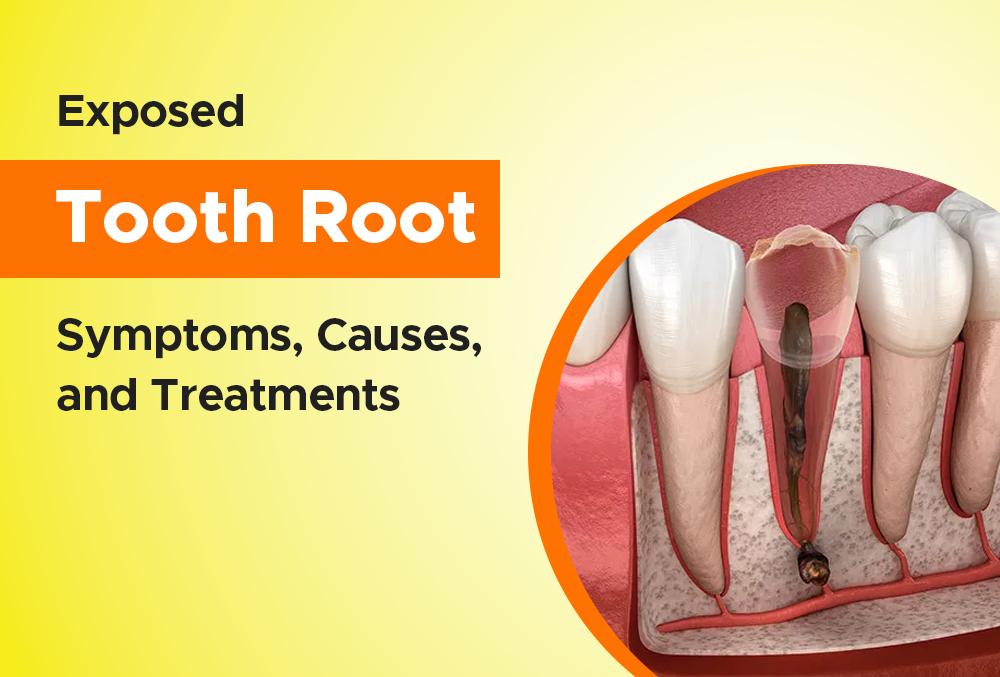
Exposed Tooth Root Symptoms, Causes, and Treatments
 FAQs
FAQs Send us a Message!