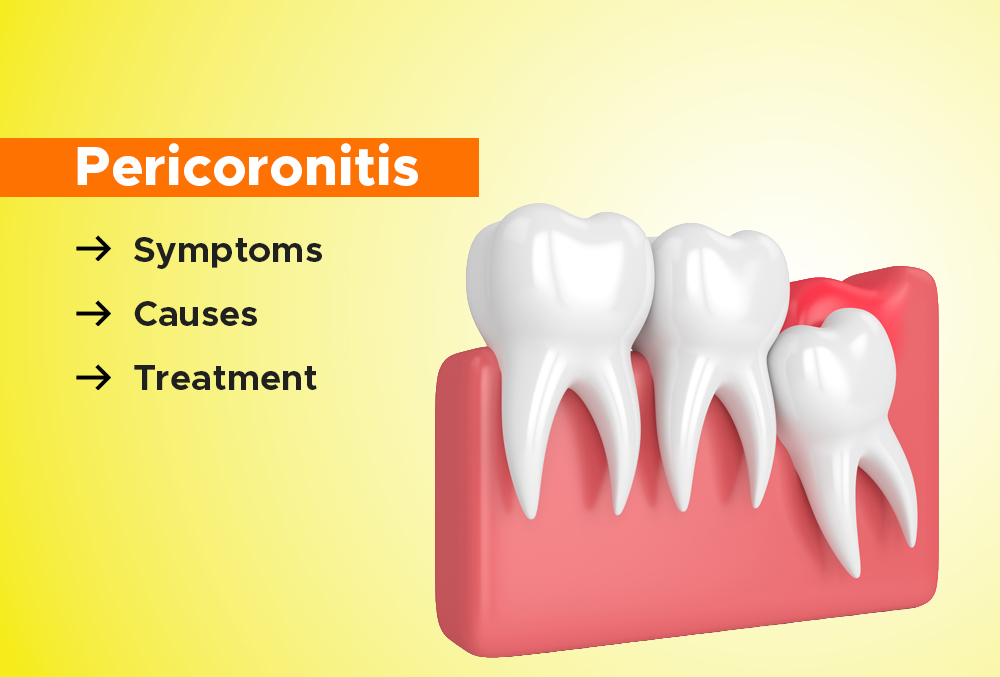
Pain near the back tooth can feel sudden and scary. It may hurt while chewing. The gum may look swollen. Some people notice a bad taste in the mouth. Many also find it hard to open their mouth fully. When this happens near a wisdom tooth, these are the clear pericoronitis symptoms.
Pericoronitis is a gum infection that happens around a wisdom tooth when the tooth is not fully out. Food and germs get trapped under the gum, and the area becomes sore and swollen.
At National Dental Care, the best dental hospital in Hyderabad with 22+ years of experience, our team of best dentist in Bangalore and Hyderabad focus to identify the cause early and guide the right pericoronitis treatment. We ensure the pain settles fast and the problem does not keep coming back.
Read on to understand pericoronitis symptoms, pericoronitis causes, and what to do next.
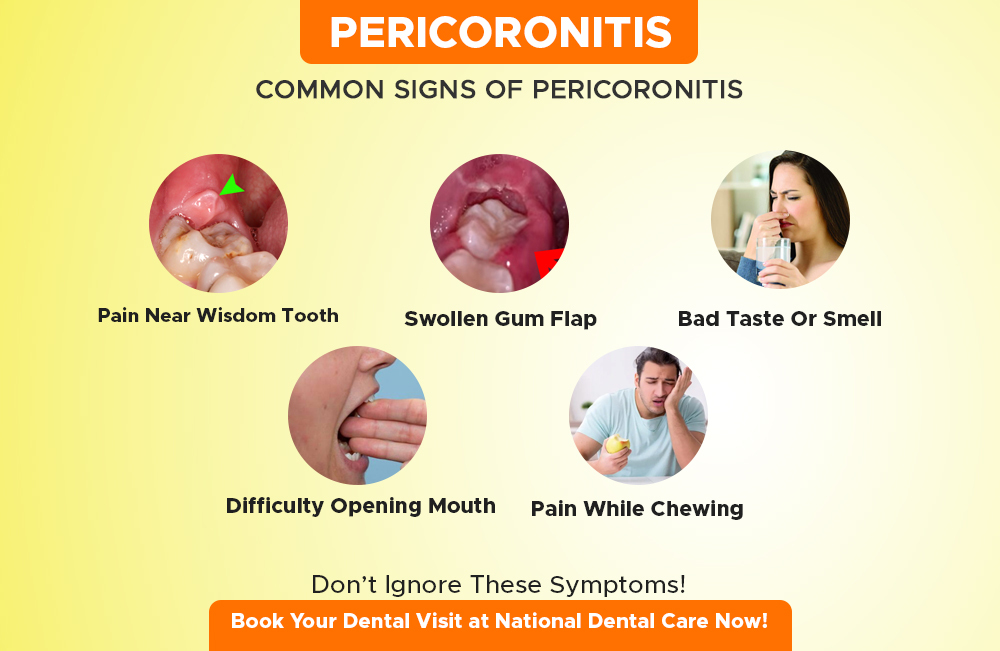
What Is Pericoronitis And Why Does It Happen Near A Wisdom Tooth?
Pericoronitis is a gum infection that starts when food and germs get trapped under the gum around a partly erupted wisdom tooth. This usually happens when a small flap of gum covers the tooth. Food gets stuck under it. Bacteria grow there. The gum becomes painful and swollen.
What Are The Most Common Pericoronitis Symptoms?
Pericoronitis symptoms often start as pain and swelling near the last tooth at the back.
Common pericoronitis symptoms include:
- Pain near the wisdom tooth.
- Swollen gum around the tooth.
- Red and tender gum.
- Bad taste in the mouth.
- Bad breath.
- Pain while chewing.
- Difficulty opening the mouth.
If the infection worsens, you may also notice fever or swelling that spreads to the cheek or jaw.
Is It Pericoronitis Or Normal Wisdom Tooth Pain?
Normal wisdom tooth discomfort is mild and improves. Pericoronitis pain often increases and comes with swelling.
A quick self-check:
- Does the pain keep getting worse each day?
- Is the gum swollen near the wisdom tooth?
- Is there a bad taste or smell?
- Is it hard to open the mouth fully?
If the answer is yes, it is more likely pericoronitis, not simple tooth eruption pain.
What Are The Main Pericoronitis Causes?
Pericoronitis causes usually come from trapped food and germs around a partly erupted wisdom tooth.
Common pericoronitis causes are:
- Food stuck under the gum flap.
- Poor cleaning access near the wisdom tooth.
- Bacteria buildup in the area.
- Wisdom tooth coming out at an angle.
- Gum getting irritated again and again.
Stress and low immunity can also make the infection flare up more easily.
Can Pericoronitis Become Serious If Ignored?
Pericoronitis can become serious if swelling spreads or if fever starts.
In some cases, infection can spread to nearby areas. This can increase pain and jaw stiffness. It can also make swallowing difficult. This is why early care is safer than waiting.
What Can You Do At Home For Quick Relief?
Home steps can reduce pain for a short time, but they do not remove the cause.
Try this:
- Rinse with warm salt water 3 to 4 times a day.
- Keep the area clean, but do not poke it hard.
- Eat soft foods for a day or two.
- Avoid very spicy or very hot food.
- Avoid chewing on that side.
If pain and swelling do not reduce within 24 to 48 hours, a dental visit is needed.
What Will A Dentist Do For Pericoronitis In The Clinic?
A dentist treats pericoronitis by cleaning the trapped area and checking if the wisdom tooth can come out properly.
In a visit, the dentist may:
- Check the swollen gum and the tooth position.
- Clean the area to remove trapped food.
- Flush the area with a gentle wash.
- Take an X-ray if needed.
- Explain the next step clearly.
This helps choose the right pericoronitis treatment for your situation.
What Is The Best Pericoronitis Treatment To Stop Repeat Pain?
Pericoronitis treatment works best when it stops the infection now and prevents it from coming back.
Common pericoronitis treatment options include:
- Professional cleaning and gum care.
- Pain medicine if required.
- Antibiotics only when truly needed.
- Gum flap removal in repeated cases.
- Wisdom tooth removal if the tooth keeps causing the infection.
The right option depends on how often it happens and how the tooth is sitting inside the gum.
When Should You Visit A Dental Hospital Or Dentist For Pericoronitis?
You should visit a dentist early if pain and swelling start near a wisdom tooth.
Visit soon if:
- Pain is getting worse.
- Mouth opening is becoming difficult.
- Swelling is increasing.
- Bad taste keeps returning.
If you are searching for the best dental clinic near me, do not wait for the pain to become severe. If you are in Karnataka, a dentist in Bangalore can check if this is pericoronitis and stop the flare up. Many patients also prefer a dental hospital in Bangalore when wisdom tooth removal is likely. If you are in Telangana, a dental hospital in Hyderabad can help confirm the cause and guide treatment.
This is the safest way to manage pericoronitis symptoms and prevent repeat episodes.
How Does National Dental Care Handle Pericoronitis Safely?
National Dental Care, rated as the best dental hospital in Bangalore, follows a step-by-step approach that focuses on comfort and long-term relief.
Care usually includes:
- Confirming the exact cause.
- Cleaning and reducing infection.
- Checking if the wisdom tooth will cause repeat problems.
- Suggesting the right long-term plan.
This reduces confusion and helps patients choose the right next step.
Do Not Ignore Wisdom Tooth Gum Swelling. Book A Check-Up Now!
Pericoronitis is common around wisdom teeth and usually starts when food gets trapped under a gum flap. It can cause swelling, pain, and bad taste. Home rinses can reduce discomfort, but they do not remove the cause. If pain is increasing, swelling is spreading, or mouth opening is getting harder, a dental check is the safest next step. Early treatment reduces repeat flare ups and helps you decide if cleaning is enough or if wisdom tooth removal is needed.
If you are searching for the best dental clinic near me, National Dental Care can help with diagnosis and the right treatment plan. Patients looking for a dental hospital in Bangalore, a dentist in Bangalore, or a dental hospital in Hyderabad can also book for clear and comprehensive wisdom tooth care.
- Call +91 91692 69369
- Visiting Hours: Mon to Sun, 9 AM to 9 PM
Frequently Asked Questions
Can pericoronitis go away on its own?
It may feel better for a short time, but it often comes back if food keeps getting trapped. A dental cleaning and proper plan prevents repeat pain.
How long does pericoronitis treatment take?
Pain usually reduces within 2 to 3 days after proper care. Full healing depends on how severe the infection was.
Does pericoronitis always need wisdom tooth removal?
No. Some cases settle with cleaning and gum care. Removal is advised if the infection keeps returning.
Is pericoronitis dangerous?
It can become serious if infection spreads or fever starts. Early treatment prevents complications.
When should you see a dental hospital in Bangalore or Hyderabad?
If swelling is increasing, mouth opening is difficult, or pain is severe, visit early. A dental hospital in Bangalore or a dental hospital in Hyderabad can check the tooth position and guide the safest next step.
Recent Article
January 7, 2026
Pericoronitis – Symptoms, Causes, Treatment

January 6, 2026
Oral Mucositis – Symptoms, Causes, Treatment

December 3, 2025
Gingival Hyperplasia – Symptoms, Causes, Treatment
December 1, 2025
Dental Granuloma – Symptoms, Causes, Treatment

November 25, 2025
Why India is Emerging as a Top Destination for Dental Tourism?
November 24, 2025
How Smile Makeovers Are Helping Patients With TMJ Disorders?
November 17, 2025
OPG Dental X-Ray Benefits and Process
November 14, 2025
Is Same Day Dental Implant Possible?
 FAQs
FAQs Send us a Message!