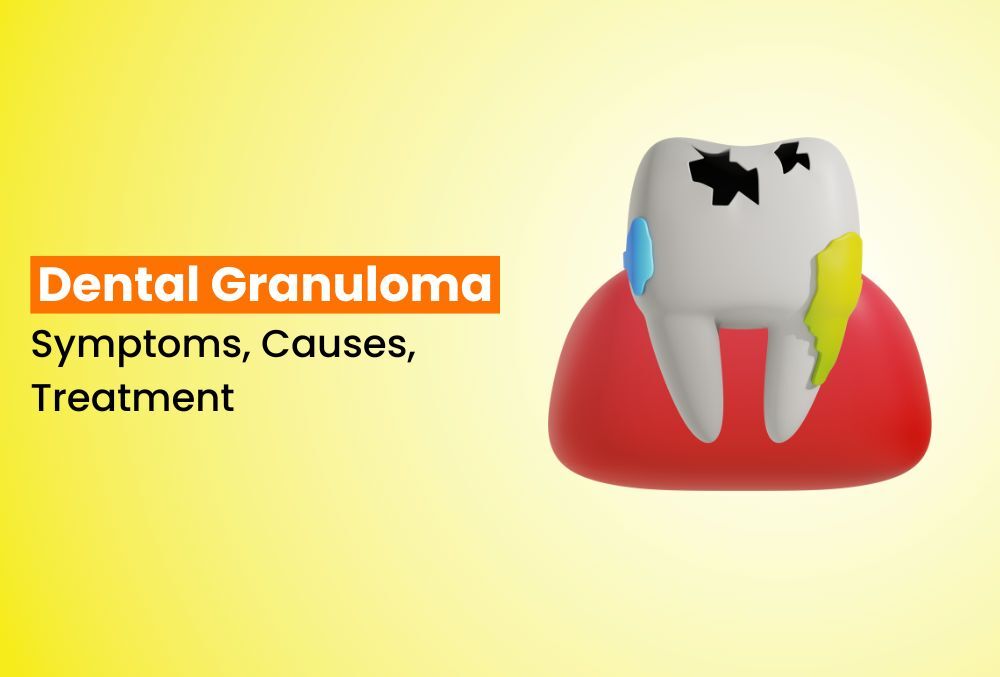
If you’ve been noticing tooth pain, recurrent gum swelling or increasing sensitivity then it might be more than just a mild dental issue. A condition known as a dental granuloma can quietly develop inside the tooth often without early warning signs. Understanding the symptoms, causes and treatment options can help protect your oral health and prevent long-term damage.
Let’s break down what a dental granuloma is and how timely care from a skilled dentist in Bangalore at National Dental Care or a trusted dental hospital in Hyderabad can make all the difference.
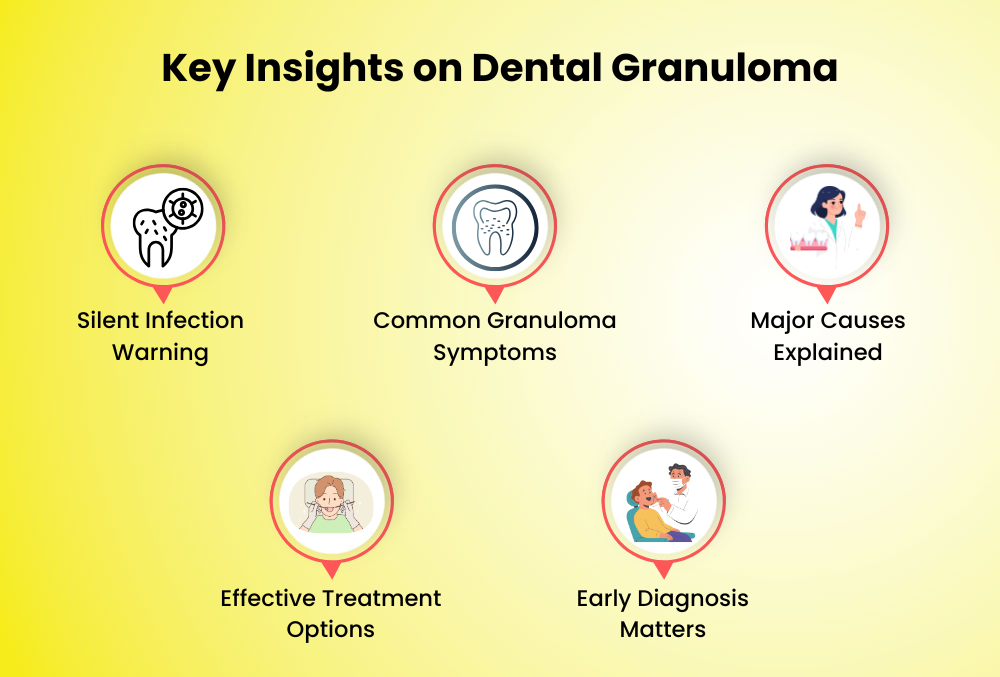
What is Dental Granuloma?
A dental granuloma is a long-standing inflammatory lesion that develops at the end of a tooth’s root due to persistent irritation or infection within the tooth. It generally forms when bacteria reach the pulp to the soft inner tissue containing nerves and blood vessels.
As the infection worsens the body attempts to contain it by forming a small cluster of inflamed tissue at the root tip. Although initially small, this lesion can expand and gradually damage the surrounding bone if not treated.
Simply put, a dental granuloma is the body’s defensive response to an infection originating from a severely damaged or infected tooth pulp.
Common Dental Granuloma Symptoms
Dental granuloma symptoms can be tricky because the condition usually progresses quietly, with little to no discomfort at first. That’s exactly why routine checkups at the best dental clinic near you or a reliable dental hospital in Bangalore become so important.
Dental granuloma symptoms may include:
- Constant toothache is a dull, throbbing pain that worsens when chewing.
- Sensitivity to hot or cold items.
- Gum swelling or small bumps that may contain pus.
- Darkened or discolored tooth due to pulp damage.
- Bad taste or foul smell caused by infection discharge.
- Tenderness near the tooth root when pressure is applied.
In many cases dental granulomas are detected only through X-rays during routine dental visits at the best dental hospital in bangalore.
Primary Dental Granuloma Causes
A dental granuloma is a condition that usually develops slowly and is often associated with old dental problems. By understanding the main dental granuloma Causes you can figure out ways to stop it from happening.
1. Deep Untreated Cavities
Decay in the tooth that goes all the way to the pulp, and bacteria spread further causing swelling and infection.
2. Pulp Infection or Pulpitis
Extremely inflamed pulp can eventually lead to the death of the tissue, resulting in the formation of granuloma by the immune system.
3. Tooth Trauma
Bacteria can break into the pulp through cracks, fragments or injury even if there is no visible decay.
4. Failed Root Canal Treatment
When root canal treatments are left halfway or done incorrectly then the bacteria that are trapped can cause the development of granuloma.
5. Poor Oral Hygiene
Not brushing, flossing or going to the dentist will infect the mouth with chronic diseases that will eventually make their way to the roots.
If you choose to disregard these causes then you risk getting complications such as bone loss, cyst formation or dental abscesses.
How Dentists Diagnose a Dental Granuloma?
Dental granuloma diagnosis requires professional examination by the best dentist in Hyderabad or a specialist at the best dental clinic in Hyderabad.
Dental granuloma diagnostic methods include:
- Clinical Evaluation: Checking for tenderness, discoloration, swelling.
- X-rays: Identifying dark and circular lesions at the root tip.
- Pulp Vitality Testing: Determining if the pulp is alive or necrotic.
- CBCT Scan (if required): Assessing bone involvement and infection spread.
Early detection helps prevent complications and guides accurate treatment planning.
Dental Granuloma Treatment Options:
The primary goal of dental granuloma Treatment is to eliminate the infection, preserve the tooth and prevent recurrence. Treatment options include:
1. Root Canal Treatment (RCT):
The most common and effective approach:
- Infected pulp is removed.
- Canals are cleaned and disinfected.
- Tooth is sealed to prevent reinfection.
Most dental granulomas heal successfully after a properly performed root canal.
2. Apicoectomy (Root-End Surgery):
Recommended if infection persists after RCT:
- The root tip and infected tissue are surgically removed.
- The end of the canal is sealed.
This is usually a last-resort measure.
3. Tooth Extraction:
If the tooth is severely damaged and cannot be saved, removal is advised. Replacement options like implants or bridges restore function and appearance.
4. Antibiotics:
Not a standalone cure but may be prescribed to control swelling and acute infection before the main procedure.
Healing & Recovery After Treatment for Dental Granuloma
Recovery varies depending on the procedure and infection severity. However, most patients feel significantly better within a few days after RCT.
- Mild soreness is normal and manageable with medication.
- Follow-up visits help ensure proper healing.
- Maintaining oral hygiene prevents reinfection.
Consistent care keeps your teeth healthy and stable.
How to Prevent Dental Granuloma?
You can greatly reduce your risk by:
- Brushing and flossing twice daily.
- Never ignoring toothaches or sensitivity.
- Visiting your dentist regularly.
- Completing root canal treatments without delay.
- Protecting teeth during sports or high-impact activities.
Good oral care and timely checkups at a dentist near me go a long way in preventing chronic dental issues.
Timely Treatment Matters: Book Your Visit at National Dental Care
Untreated dental granuloma for a long time can result in complications such as bone loss, repetitive infections or the development of painful cysts. So, getting the care on time is what makes the difference in preventing the spread of the infection thus, avoiding any irreversible damage. National Dental Care is where you will find the perfect combination of state-of-the-art diagnostic tools, experienced dental professionals and patient-engaged treatment plans to deliver rapid and efficient relief.
In case you have been feeling a toothache that won’t go away, tooth sensitivity or gum swelling, don’t delay but rather take the initiative to have your condition evaluated early, which in turn can result in saving your natural tooth and stopping the problem from getting worse.
Booking a consultation at National Dental Care is the way to go as this is the place where you will be taken care of by the best when it is most needed.
Frequently Asked Questions:
What Is a dental granuloma and How Much of a Problem Is It?
Ans. The dental granuloma refers to an abscess of the tooth infection that gradually changes the root area of the tooth. It can be relatively harmless in its early stages and still, over time, it may cause serious damage to the surrounding bone tissue. The earliest detection from a dentist near me or a reputable dental clinic in Bangalore is the best way to avoid such scenarios.
What Causes a dental granuloma?
Ans. The most common causes of dental granuloma are deep caries, infected pulp, trauma to the teeth, root canal failure and bad oral hygiene. If you take care of your dental health regularly the problem of these will be solved before they turn into a major issue.
How Do You Treat dental granuloma?
Ans. Depending on how serious the case is, different treatments might be necessary. Most situations can be resolved with a standard root canal procedure. If the infection is persistent, the doctor may recommend apicoectomy or, in a very limited number of cases, tooth extraction. The dentist in Bangalore or the best dentist in Hyderabad will definitely know what will work best for you.
Is It Possible for a dental granuloma to Happen Again after Treatment?
Ans. If the treatment is done right and the patient continues with follow-up visits, relapse is hardly ever seen. Regular visits to the best dental clinic near me is not only a way to guarantee that recovery goes as planned but also to prevent any other dental problems or reinfections.
Recent Article


January 19, 2026
Rejuvenate Your Smile: Best Dental Bridges and Crowns in Hyderabad

January 15, 2026
Zapping vs. Cutting: The Showdown in Wisdom Teeth Removal
January 7, 2026
Pericoronitis – Symptoms, Causes, Treatment

January 6, 2026
Oral Mucositis – Symptoms, Causes, Treatment

December 3, 2025
Gingival Hyperplasia – Symptoms, Causes, Treatment
December 1, 2025
Dental Granuloma – Symptoms, Causes, Treatment

November 25, 2025
Why India is Emerging as a Top Destination for Dental Tourism?
 FAQs
FAQs Send us a Message!