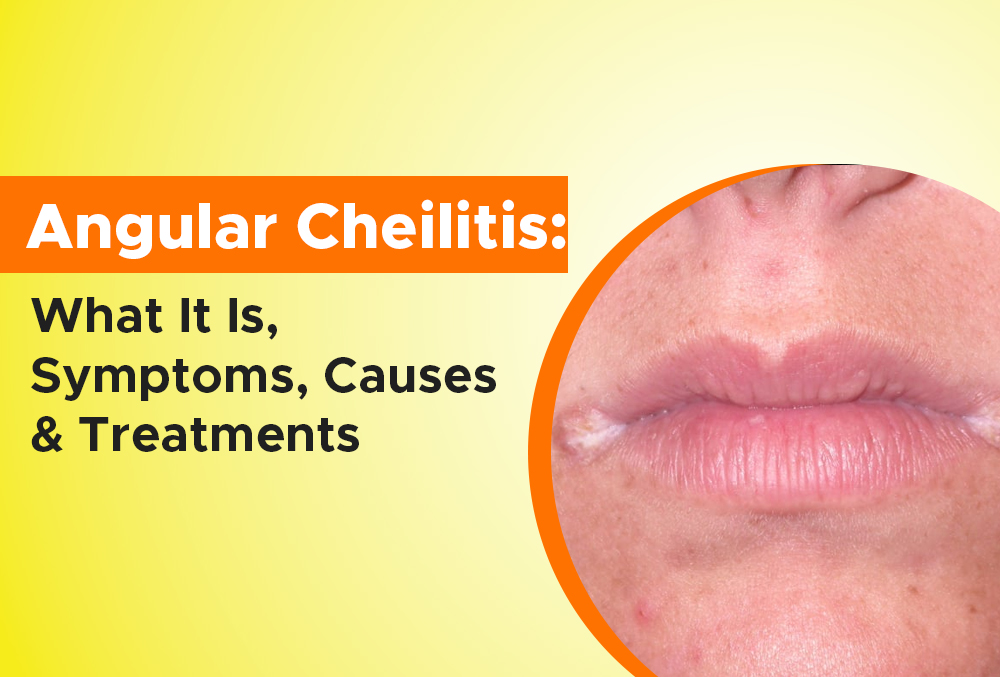
That painful crack sitting right at the corner of your mouth, the one that stings every time you smile, hurts when you take a big bite and just will not heal no matter how much lip balm you apply, has a name. It is called angular cheilitis and it is more common than most people realise.
The good news is that it is not serious, not contagious and completely treatable once you identify what is causing it. If you have been noticing angular cheilitis symptoms like redness, crusting or soreness at your mouth corners for more than a few days, you are in the right place.
At National Dental Care, our team has spent over 22 years treating oral conditions across Hyderabad and Bangalore. We are open 365 days a year and our multi-specialty clinics bring the right expertise to you without the wait. If you have been searching for the best dental clinic near me for this, read on to understand exactly what angular cheilitis is and what you can do about it.
What Is Angular Cheilitis?
Angular cheilitis is a common, non-contagious inflammatory condition that affects the corners of the mouth, also called the labial commissures. It causes painful, cracked sores at one or both corners and can range from mild redness to open, bleeding fissures that make eating and speaking uncomfortable.
You may also hear it called by other names:
- Cheilosis
- Angular stomatitis
- Perleche
- Oral commissure inflammation
The condition develops when saliva pools and sits at the corners of the mouth. Over time that moisture dries out the skin, causes it to crack and creates a warm, damp environment where bacteria and fungi thrive.
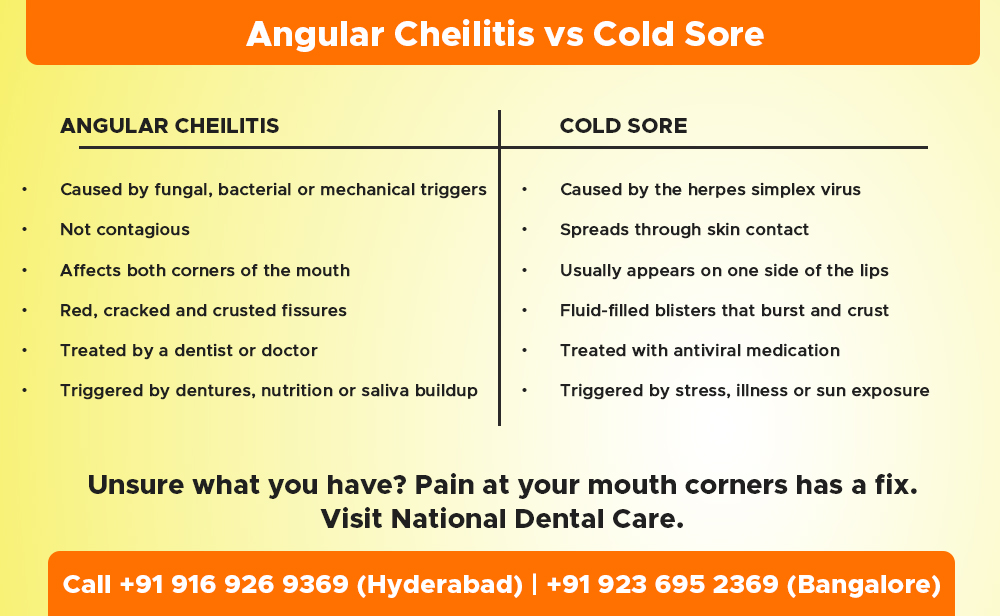
Is Angular Cheilitis the Same as a Cold Sore?
This is the most common question people ask and the answer is no. The two conditions look similar but they are completely different.
What Are the Symptoms of Angular Cheilitis?
Angular cheilitis symptoms appear almost exclusively at the corners of the mouth. They can affect one side or both and range from mild irritation to significant discomfort that affects daily life.
Here is what to look out for:
- Painful cracks, bleeding or scaling at the corners of the mouth. These are the lip fissures most people notice first
- Redness, swelling or a burning sensation around the affected area
- Itching or tenderness when touching the corner of the mouth
- Difficulty opening the mouth fully or eating without pain
- Crusting, oozing or blistering in more advanced cases
- White or red patches at the corners that may spread slightly to surrounding skin
Symptoms can come on gradually or appear quickly. In people with darker skin tones the redness may be less visible but the cracking and discomfort are just as present.
What Causes Angular Cheilitis?
Angular cheilitis rarely has a single cause. Most cases develop when two or three triggers combine to create the right conditions for the condition to take hold. Understanding angular cheilitis causes helps you address the root problem rather than just the surface symptoms.
Saliva buildup and moisture trapping
The most direct cause is prolonged exposure to saliva at the corners of the mouth. Once the skin cracks it stays moist and becomes the ideal environment for infection to grow.
This is why people who drool, lick their lips or have deep skin folds at the mouth corners are especially prone to this condition.
Fungal and bacterial infections
Once the skin at the corners breaks down, infection almost always follows. Candida albicans is a yeast naturally present in up to 60% of healthy mouths and it causes around 93% of angular cheilitis cases. When saliva creates a warm, moist pocket at the mouth corner, Candida overgrows rapidly.
A fungal infection at mouth corners is accompanied by a bacterial co-infection. Staphylococcus aureus appears alongside Candida in around 60% of cases. Together they worsen inflammation and delay healing significantly.
Dental and mechanical causes
This is the category most people and even many online resources overlook. Several dental conditions directly cause or worsen angular cheilitis. If you live near our dental hospital in HSR Layout and have been dealing with recurring mouth corner sores alongside ongoing dental issues, a proper clinical assessment can identify the exact trigger.
- Ill-fitting dentures that cause the jaw to close too far, deepening the mouth corner folds where saliva collects
- Missing teeth that reduce facial support and allow the corners of the mouth to sag inward
- Misaligned bite that puts uneven pressure on the lips and surrounding skin
- Braces or clear aligners that increase lip licking and saliva production around the mouth
- Age-related drooping of the mouth corners that traps moisture naturally
If your angular cheilitis keeps coming back and you wear dentures or have dental alignment issues, the fit of your dental work is the most likely culprit.
Nutritional deficiencies and health conditions
A nutritional deficiency is one of the most underdiagnosed causes of recurrent angular cheilitis. The most common deficiencies involved are:
- Iron
- Riboflavin (B2)
- Vitamin B6
- Vitamin B9 (folate)
- Vitamin B12
- Zinc
Beyond nutrition, certain health conditions increase the risk significantly. Diabetes raises salivary glucose levels which accelerates Candida growth. Conditions like IBD and HIV and patients on long-term steroid or antibiotic therapy are also at higher risk. Skin irritation from dry weather, eczema or harsh cosmetics can worsen existing cases though these are rarely the primary trigger.
How Is Angular Cheilitis Treated?
Treatment depends entirely on what is causing it. A correct diagnosis always comes first because applying an antifungal to a bacterially driven case will do very little. Here is how angular cheilitis treatments are approached based on the cause.
Medicated and barrier creams
- Topical antifungal creams like clotrimazole or miconazole for fungal cases.
- Topical antibiotics like mupirocin for bacterial infections.
- Low-potency steroid cream like hydrocortisone 1% for inflammation and swelling.
- Petroleum jelly or zinc oxide as a barrier to keep the area moist and stop saliva from sitting on broken skin.
- Thick moisturising ointments applied frequently, which in mild cases are sometimes enough on their own.
Dental treatments and lifestyle changes
Getting the right dental treatment early makes a significant difference. Patients visiting our dental clinic in Sarjapur Road find that a simple denture adjustment or bite correction resolves cases that months of topical treatment could not fix.
- Denture adjustment or full replacement if the fit is causing overclosure or saliva pooling.
- Bite correction for misalignment driving the condition.
- Orthodontic review if braces or aligners are contributing to increased mouth moisture.
- Avoiding lip licking entirely, which reintroduces saliva onto already damaged skin.
- Improved oral hygiene to reduce the overall bacterial and fungal load in the mouth.
- Avoiding mouthwashes with alcohol, spicy foods and extreme temperatures while the area heals.
How Can You Prevent Angular Cheilitis from Coming Back?
Recurrent angular cheilitis is extremely common, especially in people with ongoing risk factors like aging or systemic conditions. But for most people addressing the root angular cheilitis causes and building a few simple habits makes a significant difference.
- Get regular dental check-ups to catch denture fit issues or bite changes early before they trigger another episode.
- Clean dentures thoroughly every day and remove them at night to reduce overnight Candida buildup.
- Keep braces and aligner trays clean and dry as much as possible.
- Stay hydrated since dry mouth concentrates saliva enzymes and worsens corner irritation.
- Eat foods rich in iron, B vitamins and zinc like leafy greens, eggs, lentils, nuts and dairy.
- Treat oral thrush promptly since untreated thrush extends easily to the mouth corners.
- Apply a barrier cream or lip balm at night as a protective habit even between episodes.
Our dental clinic in Vanasthalipuram is open every day of the year from 9 AM to 9 PM. If you live in South Hyderabad and keep putting off that check-up, there is genuinely no inconvenient time to come in.
Your Mouth Has Been Telling You to See a Dentist. Here Is When to Listen.
Book an appointment if:
- The sores have not improved after two weeks of home treatment
- You keep getting recurring episodes every few months
- You wear dentures or have recently had dental work done
- The condition appears alongside white patches inside the mouth
- Eating or speaking has become genuinely painful or difficult
- You notice tiredness, unexplained weight loss or stomach issues alongside the mouth sores. These may point to a deeper health issue that needs investigation
Patients near our best dental clinic in Electronic City can walk in any day for a same-day oral assessment without booking weeks in advance. Getting the right diagnosis the first time saves you months of ineffective self-treatment.
Why Choose NDC for Angular Cheilitis Care in Hyderabad and Bangalore?
Angular cheilitis that keeps returning almost always has a dental trigger that home treatment cannot fix. At National Dental Care our team conducts a full oral health assessment to find whether dentures, bite issues or oral infections are driving your condition. With 22+ years of experience, advanced in-house diagnostics and a 4.9/5 Google rating across all branches, we identify the root cause and treat it properly. All our clinics stay open 365 days a year from 9 AM to 9 PM so care is always within reach.
Cracked, painful mouth corners should not be your normal. If you have been searching for the best dental clinic near me to finally fix this, book your consultation today at National Dental Care. Hyderabad: +91 916 926 9369 | Bangalore: +91 923 695 2369
FAQs
Can angular cheilitis go away on its own?
Mild cases clear up within two weeks with basic care. Recurring cases almost always have an underlying trigger like a nutritional deficiency or ill-fitting dentures that needs proper treatment.
Is angular cheilitis contagious?
No. It is an inflammatory condition and cannot spread through contact. You cannot pass it on to someone else.
How long does angular cheilitis take to heal?
With the right treatment most cases improve within one to two weeks. If yours is taking longer the underlying cause has likely not been addressed yet.
Can dentures cause angular cheilitis?
Yes. Ill-fitting dentures cause the jaw to close too far which makes saliva pool at the mouth corners and creates the perfect environment for infection.
When should I see a dentist instead of a doctor for angular cheilitis?
See a dentist if you wear dentures, have braces or have recently had dental work done. Dental causes are frequently missed in general practice and a dentist will assess your bite and oral health to find the right fix.
Recent Article
April 20, 2026
Halitosis: Causes, Treatments & Prevention
April 17, 2026
Gum Disease Treatment Cost in Bangalore
April 16, 2026
Gum Disease Treatment Cost in Hyderabad
April 15, 2026
Teeth Braces — Cost, Types, Procedure & Benefits
April 6, 2026
Exposed Tooth Root Symptoms, Causes, and Treatments
April 1, 2026
Can I Switch From Braces To Invisalign Mid Treatment?
March 31, 2026
What Is a Hybrid Denture? Benefits & How It Works
 FAQs
FAQs Send us a Message!