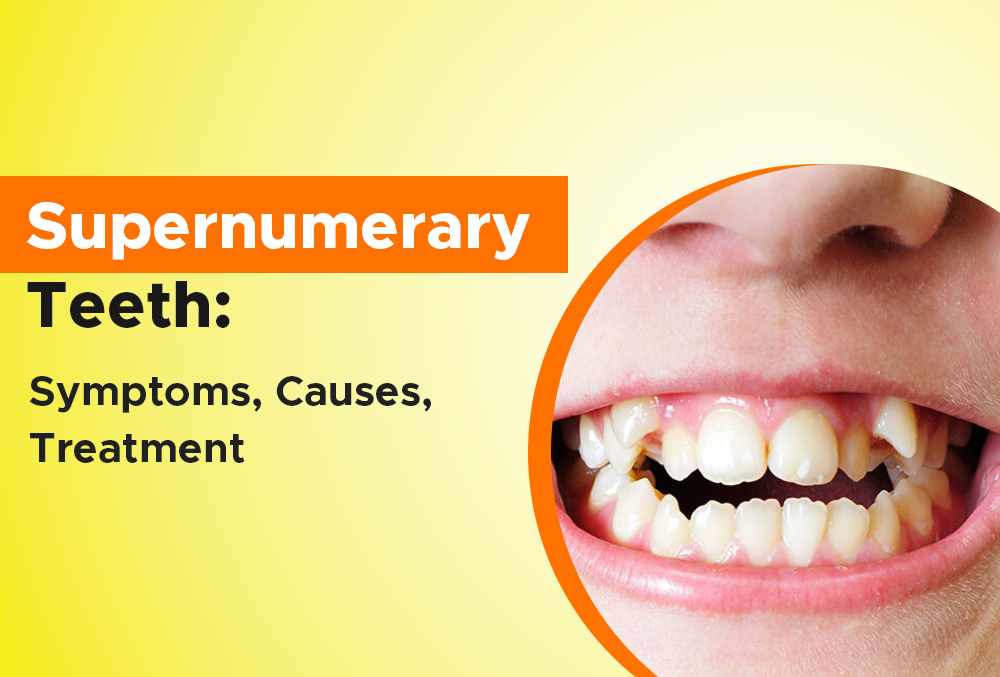
If you or your child has an extra tooth, a tooth coming in behind another one or a permanent tooth that still has not appeared, it can feel confusing fast. Most parents do not search the word first. They search the problem. They want to know if this needs treatment now or if it can wait.
Supernumerary teeth symptoms show up as crowding, delayed eruption or a tooth in the wrong place. The right next step is a proper dental check and an X-ray, not guesswork at home.
At National Dental Care, we look at the tooth position, the space available and the effect on nearby teeth before we suggest anything. We also offer pediatric dentistry, orthodontic care and clear treatment planning under one roof. If you started with a search for the best dental clinic near me, this guide will help you understand what this condition means and what to do next.
What Are Supernumerary Teeth And Why Do Parents Notice Them Only After a Child is 6?
Supernumerary teeth are extra teeth that grow in addition to the normal set of baby or adult teeth. Dentists also call this hyperdontia. Parents notice them during the mixed dentition years because that is when delayed eruption, crowding or an extra tooth in the front starts becoming easier to spot.
Parents spot the issue during the mixed dentition years, when baby teeth and permanent teeth overlap. This is the stage when a permanent tooth may not erupt on time, an extra tooth may appear between the front teeth or the upper front teeth may start looking crowded for no clear reason. A child may eat normeally and still have this issue, so many cases come to light only when the parent notices that something does not look right.
An extra tooth may grow in the upper jaw, the lower jaw or both. It may erupt into the mouth or stay hidden inside the bone. Hidden extra teeth delay the eruption of nearby permanent teeth or push them off track.
What Supernumerary Teeth Symptoms Should You Not Ignore In Children?
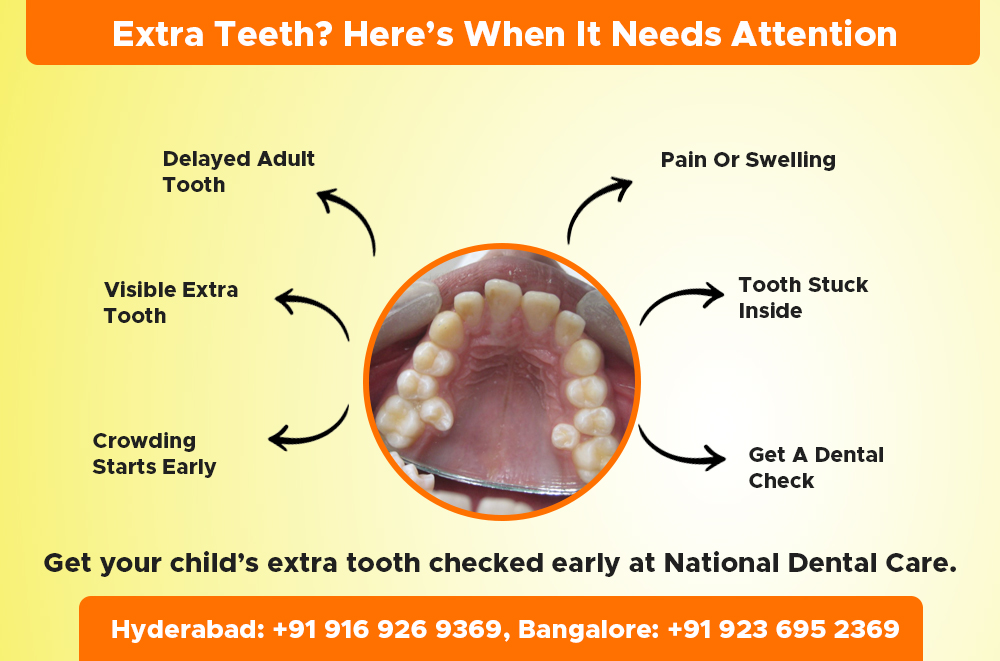
Supernumerary teeth symptoms include an extra visible tooth, delayed eruption of a permanent tooth, crowding or a tooth coming in at the wrong angle. Some signs stay hidden until an X-ray shows that an extra tooth has blocked the normal eruption path.
The most common sign is simple. You see an extra tooth. But many children do not show a clear visible sign at first.
Watch for these signs:
- Extra tooth in front or behind another tooth
- Delayed eruption of a permanent tooth
- Crowding that starts early
- Tooth growing at an odd angle
- Gap that does not make sense
- Pain or swelling in the gum
- Repeated food trapping near one area
- A tooth that seems stuck
Some supernumerary teeth symptoms stay hidden until an X-ray shows them. That is why a child may have a missing front tooth on one side even though the age looks right for eruption. A simple example helps here. A parent says, “My child has all the teeth except one front tooth, but the other side has already come.” That is a common situation where we check for an extra hidden tooth.
What Are Supernumerary Teeth Causes And Are They Always Linked To A Health Condition?
Supernumerary teeth causes include genetics, overactive dental tissue and tooth development changes that create an extra tooth bud. They are not always linked to a larger health condition, so parents should not assume the worst before a proper dental evaluation.
In many children, the exact reason does not come with one simple answer. Dentists link extra teeth to the way tooth buds form during development.
The main causes include:
- Genetics
- Family tendency toward extra teeth
- Overactive dental tissue
- Development of extra tooth buds
- Less commonly, certain syndromes
Some children also develop this condition along with certain syndromes, but that does not mean every child with an extra tooth has a larger health issue. That distinction matters.
Here is the simple way to think about it. An extra tooth can appear as an isolated dental finding. It can also appear as part of a broader developmental condition. Most parents hear this online and panic. They should not. The dentist first looks at the child’s overall health history, tooth pattern and X-ray findings before drawing any larger conclusion.
The type of extra tooth also varies. Some look like a small cone. Some resemble a normal tooth. Some stay buried and never erupt.
How Do Dentists Confirm If An Extra Tooth Is Visible, Impacted Or Blocking Another Tooth?
A good diagnosis starts with a close mouth exam and a clear history. We ask when the parent first noticed the issue, whether the child has pain and whether any permanent tooth has delayed eruption.
Then we check if:
- Any tooth has not erupted
- An extra tooth has already erupted
- Crowding has started
- The bite has changed
- Gum swelling or tenderness is present
After that, we take an X-ray. This is the step that gives real clarity. It shows whether the extra tooth sits in the gum line, inside the jawbone or against another tooth. It also shows whether the hidden tooth has started blocking eruption or changing the path of a nearby permanent tooth.
If you are searching for a dental clinic in Vanasthalipuram because your child has a delayed front tooth or unusual crowding, this is the kind of evaluation that matters most. The answer does not come from looking at the mouth alone. It comes from seeing the position of the tooth properly.
What Supernumerary Teeth Treatment Options May Be Used For Children And Teens?
Supernumerary teeth treatment may include monitoring, extraction, surgical removal of a hidden tooth or orthodontic correction if the extra tooth has already disturbed alignment. The right plan depends on the child’s age, tooth position and the effect on nearby teeth.
The treatment plan depends on the child’s age, the tooth position and the effect on nearby teeth. One child may only need monitoring. Another may need removal followed by alignment correction.
Common options include:
- Observation and review
- Tooth extraction
- Surgical removal for a hidden tooth
- Space management
- Orthodontic correction after removal
When an extra tooth erupts in the wrong place and clearly disrupts alignment, removal gives the best path forward. When the tooth stays impacted inside the jaw, the dentist checks how close it sits to the normal tooth, then plans removal with care. If the extra tooth has already pushed nearby teeth out of line, braces or aligners may help later.
Can Supernumerary Teeth Affect Braces, Aligners Or Future Tooth Alignment?
Yes, they can. An extra tooth can steal space, block eruption and push nearby teeth into a poor position before treatment even begins, which can make future braces or aligner planning more complicated.
This matters a lot for children who may need braces later. If an extra hidden tooth sits above a front tooth, the front tooth may stay trapped or come in crooked. If that happens, your orthodontic plan becomes more complex than it needed to be. That is why we do not rush straight into braces without checking the cause of the crowding first.
Parents reach out after searching for the best dental clinic in Electronic City or a dental hospital in HSR Layout because their child’s front teeth look uneven and they want braces advice. In many such cases, we first rule out a hidden extra tooth. Once we remove the blockage and create the right path, the natural tooth may erupt better and the alignment plan becomes clearer.
Book A Dental Check For Extra Teeth At National Dental Care
An extra tooth may look small, but it can change eruption, spacing and bite if you leave it alone for too long. At National Dental Care, we support children with dental exams, X-rays, pediatric dental care, extractions when needed and orthodontic planning in one place. We are open from 9 AM to 9 PM through the week, and our branches make access easier for families in Hyderabad and Bangalore.
If you are looking for a dental clinic in Vanasthalipuram or still comparing a best dental clinic near me, book a visit with National Dental Care on +91 9169269369 or +91 9236952369 and get your child’s extra tooth checked before it starts affecting normal eruption.
FAQs
Can an extra tooth go away on its own?
No, an extra tooth does not go away on its own. It needs a dental check to see whether it is harmless or affecting nearby teeth.
Does every extra tooth need to be removed?
Not always. If it does not block eruption, cause crowding or create pain, your dentist may just monitor it.
How do dentists find a hidden extra tooth?
Dentists usually find it with an X-ray. This helps them see the exact position of the tooth and check if it is blocking another tooth.
Can an extra tooth affect braces later?
Yes, it can. It may block a permanent tooth, reduce space or push other teeth out of line before braces even start.
At what age should I get my child checked for this?
Get it checked as soon as you notice delayed eruption, crowding or an odd-looking tooth. Early diagnosis usually makes treatment simpler.
Recent Article

April 20, 2026
Halitosis: Causes, Treatments & Prevention
April 17, 2026
Gum Disease Treatment Cost in Bangalore
April 16, 2026
Gum Disease Treatment Cost in Hyderabad
April 15, 2026
Teeth Braces — Cost, Types, Procedure & Benefits
April 6, 2026
Exposed Tooth Root Symptoms, Causes, and Treatments
April 1, 2026
Can I Switch From Braces To Invisalign Mid Treatment?

March 31, 2026
What Is a Hybrid Denture? Benefits & How It Works
 FAQs
FAQs Send us a Message!